duggi

exad

Tampilkan postingan dengan label 308. Tampilkan semua postingan

Minggu, 08 Februari 2015

PSA continues to drive down the corporate CO2 levels, taking back the crown for reducing emissions.

PSA Peugeot Citroën recaptured its first place standing in reducing emissions at end 2014 in Europe, with an average of 110.3 grams of CO2 per kilometre* (source: AAA DATA), compared with an average of 123.7 grams for the European market. Since 2008, the Group has gradually lowered its vehicle emissions by about 30 grams.

The new record illustrates PSA Peugeot Citroën's commitment to finding practical solutions to environmental problems. More than 50% of its R&D budget is devoted to developing technologies aimed at improving the fuel and environmental performance of its vehicles.

PSA Peugeot Citroën's top ranking is primarily the result of its engine downsizing strategy and the introduction of new PureTech 3-cylinder petrol engines, as well as the introduction of new-generation, fuel-efficient BlueHDi diesel engines. In 2014, nearly 30% of vehicles sold by the Group emitted less than 100 grams of CO2.

Paired with these highly efficient petrol and diesel engines, many Group models are low-carbon leaders in their category. Due to the fact that they represent a significant proportion of European sales, they contribute to an overall reduction in emissions.

The following models are examples of low-carbon leader vehicles:

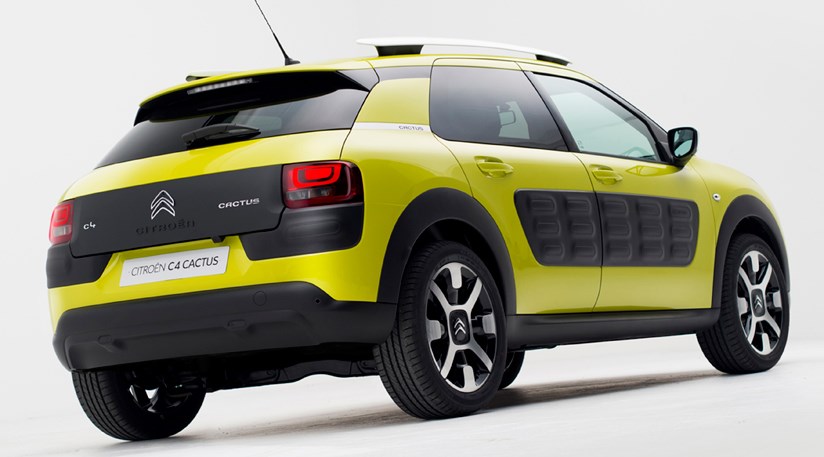
  • Citroën C4 Cactus, 1.6-litre BlueHDi, 100 hp, 82 grams of CO2 per kilometre
  • Citroën DS 3, 1.6-litre BlueHDi, 100 hp, 79 grams of CO2 per kilometre
  • Peugeot 308, PureTech 1.2-litre, 130 hp, 107 grams of CO2 per kilometre. 

This petrol version also set a new fuel economy record of 2.85 litres per 100 kilometres, covering 1,810 kilometres on a 51-litre tank of fuel.

The recent Peugeot 308 and Citroën C4 Picasso models (built on the new EMP2 platform) and the Citroën C4 Cactus (launched in 2014) weigh significantly less than their predecessors, by 140 kilograms and 200 kilograms, respectively, which is a key factor in reducing emissions.

"The outstanding reduction in CO2 emissions is the fruit of PSA Peugeot Citroën's advanced petrol and diesel engine technologies but also of its ongoing research to make lighter, more aerodynamic cars," said Gilles Le Borgne, Executive Vice President, Research and Development, PSA Peugeot Citroën. "The Group continues to invest heavily in research and innovation, particularly in the field of plug-in hybrid technologies and new-generation electric vehicles".

*Average homologated NEDC combined-cycle CO2 emissions of PSA Peugeot Citroën passenger cars registered in 2014 across 22 EU nations (excluding Greece, Croatia, Romania, Bulgaria, Cyprus and Malta).

Kamis, 05 Februari 2015

The new Ferrari 488 GTB V8 debuts at Geneva: track-level performance and responsiveness for the road.

Ferrari 488 GTB: extreme power for extreme driving thrills

Forty years on from the unveiling of its first ever mid-rear-engined V8 model, the 308 GTB, the Prancing Horse opens a new chapter in its 8-cylinder history. The Ferrari 488 GTB provides track-level performance that can be enjoyed to the full even by non-professional drivers in everyday use. Its response times, nimbleness and on-the-limit driving guarantee a unique sense of exhilaration and unparalleled driving pleasure.

The new berlinetta brilliantly encapsulates Ferrari’s experience in both F1 and the WEC, where the 458 GT holds the World Championship title and has won its category in the last two editions of the 24 Hours of Le Mans. 

The new model also exploits to the full the know-how gleaned by Ferrari technicians over the last decade through the XX programme which makes extreme track-only cars available to gentleman test-drivers. The data yielded has made a significant contribution to the refinement of the electronic and vehicle control systems so that drivers can make the most of the incredible performance of this new car.


The Ferrari 488 GTB’s new 3902 cc V8 turbo is at the top of its class for power output, torque and response times, making it the new benchmark for this kind of architecture. The engine unleashes 670 cv at 8,000 rpm along with 760 Nm of maximum torque in seventh gear and a response time to the accelerator of just 0.8 seconds at 2,000 rpm. 

These figures are sufficient to allow the Ferrari 488 GTB to accelerate from 0-200 km/h in an astonishing 8.3 seconds and, when combined with the radical innovations introduced on all aspects of the car’s performance, lap the Fiorano track in just 1’23”.

The gearbox features Variable Torque Management which unleashes the engine’s massive torque smoothly and powerfully right across the rev range, while specific gear ratios deliver incredibly progressive acceleration when the driver floors the throttle. As is always the case, Ferrari’s engineers have dedicated great attention to perfecting the 488 GTB’s sound, creating a new soundtrack that is full, clear and totally distinctive, as expected from any Prancing Horse engine.

The car’s aerodynamics also made a pivotal contribution to performance: its 1.67 efficiency figure is a new record for a production Ferrari, and is the fruit of 50 per cent more downforce than the previous model and reduced drag. The greatest challenge was achieving these two goals simultaneously. Several innovative elements were specifically developed to do so, not least a double front spoiler, base bleed side intakes and, at the rear, active aerodynamics coupled with a blown spoiler. 

The aerodynamic underbody, which incorporates vortex generators, is highly sophisticated, too.

The Ferrari 488 GTB’s subsystems and electronic controls make its power and performance instantly available and controllable. It is, in fact, the most responsive production model there is, with razor-sharp response times comparable to those of a track car.

The evolved version of Ferrari’s side slip angle control system (Side Slip Control 2 - SSC2) is more precise and less invasive, providing greater longitudinal acceleration out of corners. Aside from integrating with the car’s F1-Trac and E-Diff, the SSC2 now also controls the active dampers which renders the car’s dynamic behaviour during complex manoeuvres even flatter and more stable.

Designed by the Ferrari Styling Centre, the new car features very sculptural flanks which are the key to its character. Its large signature air intake scallop is a nod to the original 308 GTB and is divided into two sections by a splitter. The wide front spoiler features a double profile to improve the thermal efficiency of the radiators positioned at the sides. At the centre two pylons are combined with a deflector which channels air towards the flat underbody. 

The broad, low tail is also dominated by aerodynamic solutions, including an innovative blown spoiler which generates downforce without increasing drag. This works in conjunction with an aggressive ramp angle for the diffuser which features active flaps. The greater height required for the diffuser was achieved by repositioning the exhaust tailpipes. The circular LED tail lights have also been redesigned. 

In the cabin, the seamless integration of the new satellite control clusters, angled air vents and instrument panel heightens the sense that the cockpit is completely tailored around the driver. Usability was the key word in the design, leading to an extremely sporty ambience that in no way compromises on comfort. 

There are plenty of classic Ferrari styling elements too, such as the clear separation between the dashboard and tunnel, the multifunctional steering wheel, the control switch bridge and wraparound seats. The graphics and interface of the infotainment screen have also been completely redesigned while the design of the car’s new key takes its inspiration from the car’s cylinder banks and allows keyless starts.

The Ferrari 488 GTB will make its world debut at the International Geneva Motor Show in March, but from today can be seen at www.ferrari.com.

Jumat, 30 Januari 2015

Top 20 best sellers for 2014 in France, Surprise surprise, most are French.

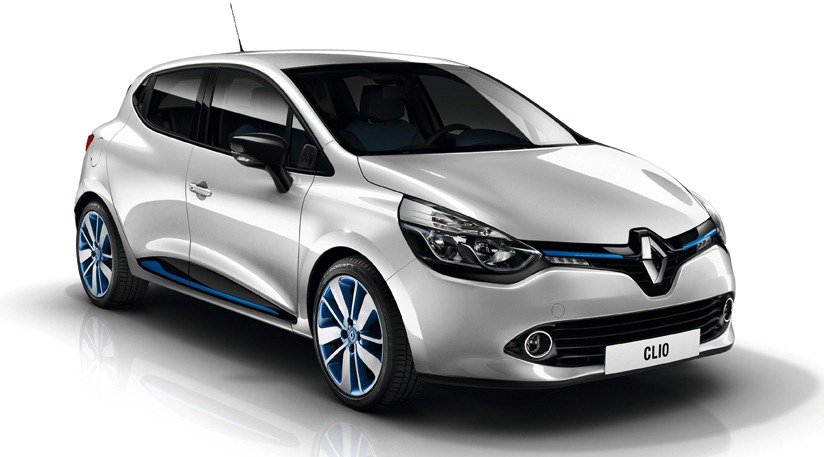
The Renault Clio and Peugeot 208 remained the top-selling car models in France during 2014. The Captur and 308 were also favorites of French car buyers. In a flat car market, the Fiat 500 was the only truly new model on the top-twenty list of best-selling car models in France in 2014. No foreign brands were among the top ten most-popular car models in France.

Top 20 Car Models in France in 2014

The twenty most popular car models in France in 2014 according to new passenger vehicle registration data released by the CCFA were:
Position 2014Position 2013Car Make & ModelCars Sold in 2014Cars Sold in 2013
11Renault Clio IV105,182103,172
22Peugeot 20883,96590,484
37Renault Captur62,98539,629
433Peugeot 308 II60,84213,402
53Citroen C3 II59,62753,376
615Peugeot 200854,16128,012
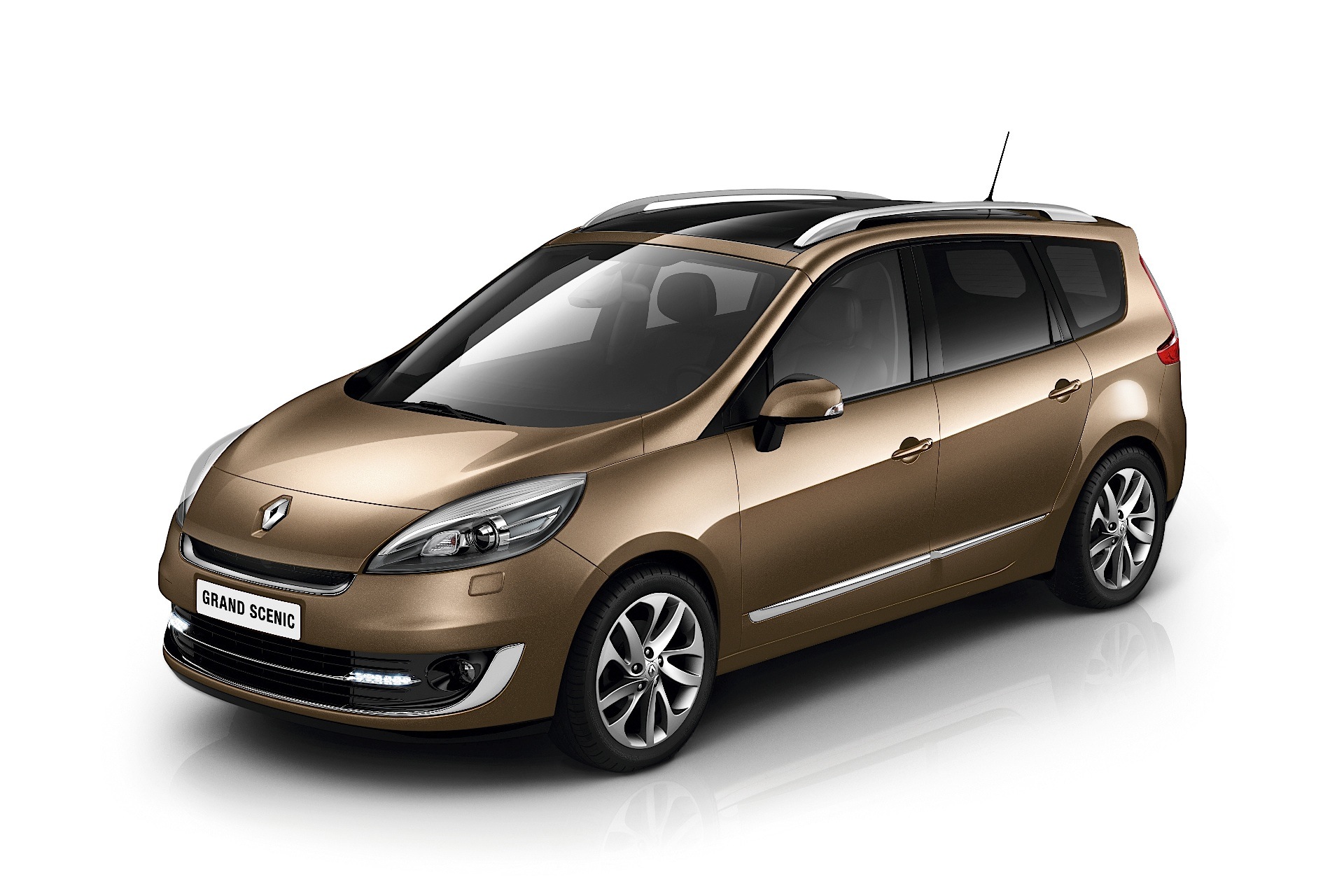
74Renault Scenic III49,06850,968
821Citroen C4 II Picasso45,33923,474
95Renault Megane III44,79143,070
106Dacia Sandero44,35742,841
118Volkswagen Polo40,40739,068
1218Dacia Duster40,16725,879
1310Peugeot 300837,97038,427
1412Volkswagen Golf VII37,13135,148
1514Nissan Qashqai30,02428,379
169Renault Twingo II27,45239,032
1713Toyota Yaris27,23429,207
1811Citroen C4 II26,15836,244
1917Ford Fiesta24,91626,118
2028Fiat 50022,09919,006
Source: CCFA / AA Data

Top 10 Best-Selling Cars in France in 2014

The list of the top 10 most popular car models in France in 2014 was once again led by the Renault Clio and Peugeot 208. These were also the only two car models that managed to maintain their exact rank positions from a year ago.
The Renault Clio IV has been France’s top-selling car model since its launch in 2012. In 2014, Clio sales in France increased by just over 2,000 cars compared to a year ago.
The Peugeot 208 has been the second most-popular car model in France since its full year in production in 2013. In contrast to the Clio, sales of the small Peugeot were down nearly 6,000 cars compared to a year ago.
Sales of the Renault Captur increased sharply in 2014 making it France’s third best-selling car compared to seventh a year ago.
The Peugeot 308 II shot up from 33rd to 4th but this is largely due to the practice in France of listing cars according to the model and not just the model name. A year ago, the Peugeot 308 was the 7th most popular car model and when sales of the 308 and 308 II were added together, the model would have been in fourth place overall.
Although sales of the Citroen C3 were higher in 2014 than a year ago, the model slipped two places from third to fifth.
The Peugeot 2008 continued to improve and with almost double the sales from a year ago entered the top 10 list at sixth place from 15th a year ago.
Sales of the Renault Scenic were flat but the model dropped three places from 4th to 7th.
The Citroen C4 Picasso entered the top 10 list at 8th from 21st a year ago but this is again largely due to a new model being counted separately from it predecessor a year ago.
Although sales of the Renault Megane were stronger in 2014, the model slipped to 9th from 5th a year ago. In 2012, the Megane was the second most-popular car model in France, missing out on the top slot by only a few hundred units.
The Dacia Sandero similarly slipped four positions from a year ago despite selling more cars in 2014 than in 2013.

Top 20 Most-Popular Car Models in France in 2014

The VW Polo was again the best-selling foreign branded car model in France in 2014. However, the Polo slipped out of the top-ten list, where it has been the 8th most-popular car model for the previous two years.
The Dacia Duster saw sales increased strongly allowing it to move up from 18th to 12th most-popular car in France in 2014; a position it also held in 2012.
Despite sales slipping only marginally, the Peugeot 3008 has slipped out of the top 10 list in 2014 – it was 10th in 2013 and 9th in 2012.
Sales of the Volkswagen Golf – Europe’s favorite car model – continued to increase in France in 2014. However, the Golf lost two rank places from a year ago.
The Nissan Qasqai – the most popular Japanese car in France in 2014 – similarly slipped one position despite stronger sales.
The Renault Twingo II slipped from 9th a year ago to 16th largely due to a model change. The Twingo III has been selling well since its launch towards the end of 2014 and is the car most likely to reenter the top-ten list next year.
The Toyota Yaris, Citroen C4 and Ford Fiesta all had weaker sales in France in 2014 and all lost rank position but remained amongst the top 20 most popular cars in France.
The Fiat 500 was the only truly new model on the top-20 list – up from 28th a year ago. It replaced the DS3 that slipped to 24th.
The other two top-20 cars from a 2013 no longer on the list are the Peugeot 207 and Peugeot 208 – both cars were replaced by new models.

Rabu, 28 Januari 2015

BusinessCar awards its car of the year title to the Mercedes-Benz C-Class.

BusinessCar Magazine’s 2015 Car of the Year is the Mercedes-Benz C-class.

The fleet publication’s awards carry particular weight because they are the only accolades in the industry to be decided entirely by the readership of BusinessCar magazine and BusinessCar.co.uk, and the C-class took the top spot ahead of Peugeot’s impressive new 308.

BMW continued to show its strength in the fleet market by taking two headline awards, including Manufacturer of the Year for the fifth year running and Green Model of the Year with its pioneering i3 electric supermini.


Leasing company Alphabet took the remaining headline award as Service Supplier of the Year.
“The new C-class has propelled Mercedes-Benz into the middle of the fiercely competitive premium upper medium saloon marketplace and massive improvements over the previous model have meant the company has picked up its first ever Business Car of the Year prize,” said Paul Barker, BusinessCar editor.

“The C-class currently offers the most efficient diesel in the sector and there’s also a 94g/km hybrid, plus the 48g/km plug-in coming in April 2015.

“But there’s more to the C-class than just efficiency gains. The classier and more sporty looks combine with a serious focus on whole life costs to propel the new model into fleet heartland territory.”

Barker continued: “BMW’s popularity with the fleet industry is clearly demonstrated with its win as Manufacturer of the Year and this is backed up by four car category wins overall.  It highlights BMW as a brand getting it right for fleet across its range, with cars that are appealing, good to drive and great value to run.

“The corporate market is extremely competitive with some incredible products available to help businesses carry out their work. Winners at this year’s awards should be proud that BusinessCar’s readers have picked them out as the best in the industry.”

Other notable winners include The AA, which picked up three awards in the important Accident Management, Risk Management and Vehicle Recovery categories. Volkswagen also picked up multiple awards with wins in the mainstream lower medium, mini-MPV and mainstream 4x4 categories for its Golf, Touran and Tiguan respectively, while Ford, Vauxhall, Hyundai, Kwik-Fit and BCA were also among the winners.

Minggu, 25 Januari 2015

Award-winning PEUGEOT 308 introduces performance GT models, beautiful cars.

  • Award-winning PEUGEOT 308 introduces performance GT models
  • Diesel powered Hatchback and SW body styles, and petrol Hatchback
  • All feature lower ride height, unique design and high specification
  • Key 308 features ensure GT is even more engaging and exhilarating to drive
The showroom success enjoyed by the award-winning PEUGEOT 308 looks set to reach even greater heights with the arrival of a new dynamic flagship – the stunning 308 GT.

Available in Hatchback and SW body styles, both models offer assertive new styling, outstanding performance-oriented engines and bespoke chassis modifications to create a lower ride height. The result is an exceptional on-the-road experience that will delight the most enthusiastic drivers. The enhancements clearly embody PEUGEOT’s continued move up-market, highlighted by the 308’s recognition as the 2014 European Car of the Year.

The new PEUGEOT 308 GT retains all the elements which have made the 308 range such a huge commercial hit throughout Europe. This includes the striking exterior design, innovative PEUGEOT i-Cockpit cabin, versatile interior and high perceived quality. Remarkable engine efficiency, with high fuel economy and ultra-low emissions, is also part of the 308 GT package.


Assertive sporty styling

The 308 GT’s unique design quality is immediately obvious. The iconic PEUGEOT Lion emblem has moved from the bonnet’s leading edge to the front grille, with three horizontal blades on either side. For optimum vision in all circumstances, the 308 GT has been fitted with top-of-the-range headlights made up of 62 LEDs.

Exclusive new direction indicators also distinguish the 308 GT from other models. Their dynamic sequential operation, moving from the inside to the outside, emphasizes the technological identity of the car. They are placed above the new air scoops which supply the engine with additional cooling.

The 308 GT presents a great aerodynamic and stylistic purity, most notable where the black lacquered door mirrors merge with the tinted windows. Visibly widened by its side sill finishers, the 308 GT sits on 18-inch ‘Diamant’ wheels, shod with Michelin Pilot Sport 3 tyres. Their fluted spokes and engraved motif are also available on 308 GT-Line models.

At the rear, the 308 GT offers a striking and distinctive posture, due in part to the lacquered black diffuser and stylish twin exhaust pipes. The GT signature is integrated into the tailgate, as well as the front grille and front wings.

The range of colours for the 308 GT includes the new and exclusive ‘Magnetic Blue’. Evocative of the blue historically reserved for French competition vehicles, this bold shade suits the car’s fluid and dynamic lines, while emphasising its lowered ride height.

An exclusive new ambiance is also achieved in the car’s cabin, with both the roof lining and upper window pillars finished in anthracite. Red stitching adds a performance air to the upholstery trim and is also found on the dashboard, door panels, gear lever gaiter and floor mats.Aluminiumdetailing on the pedals, coupled with stainless steel sill finishers in the door apertures, add the finishing touch.

Vital in any sports-oriented car is the correct driving position. It’s already ideal in this new model because of the ergonomics of the PEUGEOT i-Cockpit, as seen in every 308. The driver can adjust the height and reach of the compact steering wheel, which is unique to this car due to its perforated leather trim and GT badge. The instrument panel bears a newchequeredflag motif background and switching on the ignition produces a GT welcome message. To complement this, the large touchscreen displays a new colour scheme dominated by red and black, titled ‘Redline’.

Remarkable dynamic performance

To deliver maximum enjoyment, the 308 GT features enhanced new chassis settings. Ride height has been lowered by 7mm at the front and 10mm at the rear for a more dynamic drive. The revised suspension is mated to a choice of high-performance engines, one petrol and one diesel, that both meet stringent Euro 6 emissions standards.

The four-cylinder 1.6-litre THP 205Stop&Startpetrol engine is specified with a six-speed manual gearbox to make the most of its 285Nm of torque, available between 1,750 and 4,500rpm. This high level of performance is combined with well controlled CO2 emissions and fuel consumption, from just 130g/km and 50.4mpg. Engineers used all of the Brand’s expertise to achieve a remarkable power-to-weight ratio of just 5.85kg/hp (171hp per tonne) on this model.

To achieve these results, the engine combines:
  • a twin-scroll turbocharger, for performance and instant response from a very low engine speed
  • direct fuel injection assuring optimum combustion efficiency
  • variable valve lift on inlet, coupled with variable valve timing on both inlet and exhaust (VTi technology, Variable valve and Timing injection)
  • Stop&Start to reduce fuel consumption and CO2 emissions, as well as improving general comfort in urban driving
The four-cylinder 2.0-litre BlueHDi 180 diesel engine also offers a high level of performance. It delivers its maximum power of 180hp at 3,750rpm and its maximum torque of 400Nm at 2,000rpm. Highlighting PEUGEOT’s attention to engineering detail, reducing the thickness of wall casings and the use of engine ancillaries only when required has led to a 7kg weight saving. 

With a power-to-weight ratio of just 7.3 kg/hp (136hp per tonne), this engine needs only 5.5 seconds to accelerate from 50-70mph in 5th gear. With a capacity of 1,997cc, it presents remarkable CO2 emissions of just 103g/km, with official fuel consumption of 70.6mpg.
To achieve these results, the engine combines:
  • a 3rd generation common-rail fuel system operating at up to 2,000 bars
  • a new combustion chamber optimising the mixture of air and fuel, delivered by seven-hole injectors
  • a compression ratio raised to 16.7:1 to improve the overall efficiency of the engine
  • engine oil of very low viscosity, type 0W15
This diesel engine is coupled to an EAT6 (Efficient Automatic Transmission) six-speed automatic gearbox, designed and developed in collaboration with Aisin AW. Its efficiency is almost the same as for a manual gearbox due to reduced internal friction and the use of torque converters applied whenever needed to avoid transmission slip. This impressively results in CO2 emissions and fuel economy comparable to those achieved with the best manual gearboxes.

The 308 GT’s suspension set-up (pseudo MacPherson at the front, deformable beam at the rear) has been given specific settings to suit the engines and the spirit of the car. The focus is on a performance-oriented and dynamic drive with excellent body control, while still maintaining a high level of comfort.

To achieve this, engineers worked on all of the settings to provide precise control on the extremes of road conditions, providing secure driving and avoiding unwanted over or under-steer. For example, the passive dampers, with new ratings for effort/speed, regulate instantly to adapt to the type of driving. 

For reduced noise, they have a hydraulic bump stop. Depending on the version, the front and rear suspension is stiffened by 10% to 20% for an extremely responsive reaction, with no lag. The variable electric power steering allows instinctive positioning of the Michelin Pilot Sport 3 tyres with their high level of grip.

Performance of this level demands an effective braking system, easy to modulate and with excellent thermal resistance. This is provided by a Bosch 9CE central unit distributing the braking effort between the four discs. At the front, the 330mm diameter and 30mm thick discs are gripped by floating calipers with 60mm pistons. At the rear, the discs are 268mm diameter on 308 GT and 290mm on 308 GT SW. Both engine types have switchable ESP as standard.

A heightened driving experience

At one with the PEUGEOT i-Cockpit, the 308 GT driver is at the heart of the driving experience due to the 308 range’s standard-fit compact steering wheel and head-up instrumentation. Pleasure is further enhanced by the Driver Sport Pack, standard on every 308 GT. This includes:
  • amplified and more sporty engine noise
  • instruments illuminated with red display
  • instrument panel that displays the power and torque delivered, turbo pressure, longitudinal and transverse acceleration
  • firmer and more responsive  power steering
  • more responsive accelerator pedal mapping
  • more responsive operation of the EAT6 gearbox, with steering wheel-mounted control paddles
The driver can choose to turn off the Driver Sport Pack setting for a more comfort-orientated drive, using a button on thecentreconsole.

To make the most of its character, the new GT offers various driving aids. Using radar built into the front of the vehicle, the Driver Assistance Pack includes three systems:
  • Dynamic Cruise Control: automatically maintains and adjusts the speed of the vehicle to match the speed of the vehicle ahead. This ‘Dynamic’ function can be switched off by the driver.
  • Emergency Collision Alert System: a visual and audible indication to encourage the driver to brake to avoid a collision.
  • Emergency Collision Braking System: early application of the brakes to avoid a collision or reduce its consequences.
With the Blind Spot Monitoring System, LEDs in the door mirrors illuminate to warn the driver that there is a vehicle in the blind spot. Park Assist is an active parking aid allowing automatic parallel or bay parking.

The PEUGEOT 308 GT range comprises:
308 GT - Hatchback Combined Econ CO2 Ins GpMax Speed 0-62mph
1.6L THP 205 S&S50.4mpg130g/km19 146mph 7.5secs
2.0L BlueHDi EAT6 180 S&S70.6mpg103g/km16 136mph8.4secs
308 GT - SW
2.0L BlueHDi EAT6 180 S&S

68.8mpg  107g/km17 135mph8.6secs
All 308 GT cars have a 6-speed transmission. The ‘EAT6’ is an abbreviation for ‘Efficient Automatic Transmission’ 6-speed.

The PEUGEOT 308 GT is now available to order with deliveries commencing from March 2015.