duggi

exad

Tampilkan postingan dengan label Nick Gibbs. Tampilkan semua postingan

Selasa, 27 Januari 2015

Honda confirms the ACCORD is being dumped in Europe from next year.

Honda will end sales of the Accord midsize sedan in Europe after the car failed to make headway against German rivals. “We are running out the Accord and we will not return to the segment,” Leon Brannan, Honda’s UK car division boss, told Automotive News Europe at a press event here.
Honda has struggled to sell the Accord in a segment where even the most popular mass-market models such as the Volkswagen Passat and Ford Mondeo are losing sales to premium rivals such as the BMW 3 series and Mercedes C class.

Brannan said the midsize segment is dominated by corporate sales to German premium brands. “The cost to compete is eye-watering,” he said.
Honda launched the Accord in Europe in 1977 and began building the car at its factory in Swindon, England, in 1992. The Accord attracted buyers with its reliability and affordable technology.
However, after a production shift from the UK to Japan in 2000, Honda was unable to match discounts offered by European automakers when the yen strengthened against local currencies.

The Accord’s European sales fell 19 percent to 3,453 last year, according to data from JATO Dynamics.
Honda’s total vehicle sales in the EU and EFTA markets fell 5 percent to 133,268 last year, giving it a 1 percent market share, according to data from industry body ACEA.
Honda expects its European sales to rebound this year, helped by new models including the HR-V subcompact crossover, which will go on sale in Europe in the spring. The company has also refreshed its top-selling car in Europe, the CR-V compact SUV.
Nick Gibbs

Jumat, 23 Januari 2015

Ford to tweak EcoSport to make it a better buyers choice - about time too, it is awful.

Ford Motor will offer the EcoSport SUV in Europe without the spare wheel on the outside of the rear tailgate after the SUV's sales got off to a slow start.
The EcoSport has failed to make a big impact in the region’s booming subcompact SUV/crossover segment against sleeker-looking rivals such as the Renault Captur, Peugeot 2008 and Opel/Vauxhall Mokka.

When the India-built EcoSport launched in Europe last year, Ford said the vehicle’s rear design could not be changed.
Ford now says the EcoSport will be sold in Europe without the exterior spare wheel starting in May. It will be an option offered at no extra cost, a Ford spokesman said. The EcoSport’s rear door will remain side-hinged.
The SUV’s redesign will also include new interior plastics and changes to the suspension. “We want to give it a bit more Fiesta personality,” the spokesman said. The Fiesta subcompact hatchback is Ford’s No. 1 seller in Europe.
IHS Automotive analyst Ian Fletcher said Ford appears to have made a “big misstep” with the EcoSport in Europe, given the potential growth in the segment in the next couple of years.
Ford sold 11,257 EcoSports in Europe through November after launching the model in April, according to figures from JATO Dynamics.
The segment leader, the Renault Captur, had sales of 149,701 during the same period. The Peugeot 2008, the No. 2 seller, had sales of 125,002 while Opel sold 114,658 Mokkas.

IHS forecasts that European sales of subcompact SUVs will grow to more than 900,000 by 2017 from 500,000 last year, boosted by new arrivals such as the Fiat 500X, which IHS predicts will sell over 70,000 units to put it fifth behind the Captur, 2008, Nissan Juke and Mokka.
IHS forecasts that Ford will sell 20,239 EcoSports in Europe this year, instead of its original prediction of 36,000 sales.
Ford designed the EcoSport to suit customers’ tastes in its main markets of India and Brazil where buyers prefer rugged-looking vehicles. Late last year Ford started production of the EcoSport in Russia to take advantage of the country’s growing SUV market.
Nick Gibbs

Kamis, 22 Januari 2015

MINI to end production of three models in order to stabalise profits across the rest of the range.

To boost Mini’s prospects of long-term profitability parent BMW Group has decided the British brand needs to shrink its lineup to five models from eight. Mini is expected to discontinue three slow-selling vehicles -- the Coupe, Roadster and Paceman – so it can concentrate on the five model lines that accounted for about 95 percent of the 325,000 vehicles it built last year, according to data from IHS Automotive. 

BMW Group does not report individual financial results for the BMW, Mini and Rolls-Royce brands, which has left analysts wondering whether Mini has ever made any money.

“BMW has struggled to make Mini into a profit center from the beginning,” said Max Warburton, an auto analyst at Bernstein Research. He said that Mini’s cars are built on a low-volume platform and that the automaker has undergone “all sorts of complex model line proliferation -- it’s hardly a recipe for making money, at least compared to some of their BMW-branded products.” Mini’s industrial matrix is complex. It builds eight models underpinned by three different platforms in three different plants and has had an average annual volume of about 313,000 units in the last three years.
Warburton expects Mini to become more financially viable once it starts offering a smaller, more consistent range underpinned by a single architecture, which will be shared by BMW brand models such as the 2-series Active Tourer and the next-generation 1 series.

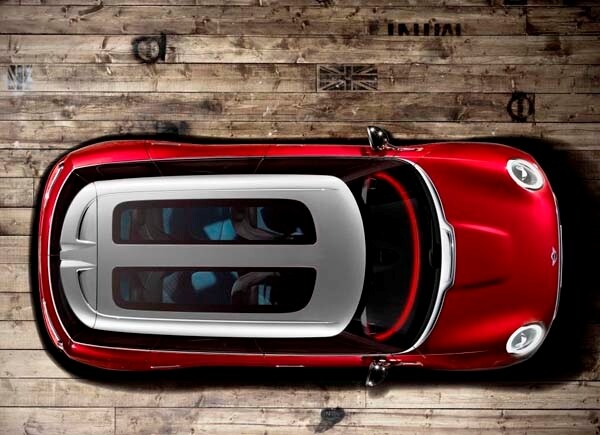
Peter Schwarzenbauer, the BMW board member in charge of Mini, has been a strong advocate for a radical review of the Mini range. “It is important to find the right balance between growth and profitability,” he said late last year while announcing that Mini’s range would be trimmed. Schwarzenbauer said Mini would focus on “superhero” vehicles including the three- and five-door versions of its core hatchback, the Countryman and the Clubman station wagon, which will be renewed this year.
“Like a superhero, each of these cars has its own personality and unique capabilities,” Schwarzenbauer said, without identifying which Minis would be cut and when. However, Oliver Friedmann, the Mini’s head of product management, told Automotive News Europe last year that the Coupe, Roadster and Paceman are not “a priority” in the automaker’s renewal plan. The Coupe and Roadster were conceived as small-volume variants that would help maintain interest in the brand as it transitioned to the fourth generation of its top-seller, the Mini three-door hatch, which debuted last year. IHS Automotive expects Mini to discontinue the Coupe and Roadster this year.
Industrial revamp
Mini also is counting on profits to rise following a radical industrial reorganization of its main factory in Oxford, England, that has boosted daily output to 1,000 vehicles a day from about 700. A key part of that was the switch to making cars using BMW Group’s UKL platform at the plant. The first Mini cars to be underpinned by the UKL architecture are the new three- and five-door hatchbacks. The second-generation Clubman also will use the platform when production starts in Oxford later this year. Oxford builds the Convertible, Coupe and Roadster on the platform BMW created to relaunch Mini in 2001.
Magna Steyr’s plant in Graz, Austria, builds the Countryman and Paceman using a dedicated platform. BMW confirmed it will build another model in Graz after it shifts the next-generation Countryman to another plant. IHS expects production of the new Countryman to start in 2016 at the VDL NedCar plant in Born, Netherlands. VDL began making the Mini three-door hatchback in July 2014 using the UKL platform.
Nick Gibbs and Bloomberg

Selasa, 23 Desember 2014

CHINA - Jaguar's new XE to be built in China from Scratch, with a new engine plant to come.

Jaguar’s new XE will be the brand’s first model made in China, a Jaguar Land Rover executive toldAutomotive News Europe.
The midsize premium sedan will be built alongside the Range Rover Evoque and Land Rover Discovery Sport premium SUVs at the automaker’s new plant in Changshu, JLR global fleet director Ken Forbes said. He declined to say when XE production would begin. JLR started making the Evoque at its joint plant with China’s Chery Automobile in October.
Expansion plans
Adding production in China is part of Jaguar’s ambitious expansion plans that include the launch of at least three all-new or heavily revised models by 2016.

European sales of the XE start in May followed later in the year by the arrival the new-generation XF large premium sedan with a midsized crossover due in in 2016. All three models will be underpinned by Jaguar Land Rover’s new aluminum platform. Analysts predict the new cars will increase Jaguar’s global sales to almost 200,000 by 2017 from a forecast of 80,000 for 2014.
Jaguar expects 2014 China sales to be about 20,000 cars, which is less than one-fifth of total JLR sales in the country. Jaguar’s volume in the world’s largest car market is expected to get a big boost from the XE.
“Our spearhead vehicle for China is the XE and we think it could make significant inroads -- it's inevitable that's going to be case,” JLR Sales Operations Director Andy Goss told Automotive News Europe.
Jaguar hasn’t confirmed whether it will build a long-wheelbase XE variant, which would rival models such as the stretched BMW 3 series. Customers in China favor vehicles with roomier interiors, especially for rear-seat passengers.
JLR’s China plant is forecast to reach its 130,000 capacity by 2016, the company has said. The automaker will add an engine plant in 2015. With both facilities running the XE would become the first Jaguar to be fully assembled outside the UK. The brand currently assembles Jaguars from kits at its factory in Pune, India.
2020 target: 850,000
The company, owned by India’s Tata Motors, has said it wants to double combined Jaguar and Land Rover sales to 850,000 by 2020 and is expanding its production base to accommodate the extra growth.

In 2016 JLR will start production in Brazil at a new factory with a capacity of 24,000. The first car off the line will be the new Land Rover Discovery Sport, which will debut next year as a successor to the Freelander (sold as the LR2 in the U.S.).
JLR said that construction of the Brazil plant, which is in Itatiaia, in the state of Rio de Janeiro, would start at the end of the year at a cost of 750 million reals ($304 million). Production will likely start with kits imported from the UK, said Richard Else, who is director of Land Rover’s plant in Halewood, England.
JLR CEO Ralf Speth confirmed earlier this year that the company also has started talks to open a plant in Saudi Arabia. In addition, JLR has neither confirmed nor denied media reports that it is looking to build a U.S. plant.