duggi

exad

Tampilkan postingan dengan label automotive news europe. Tampilkan semua postingan

Selasa, 03 Februari 2015

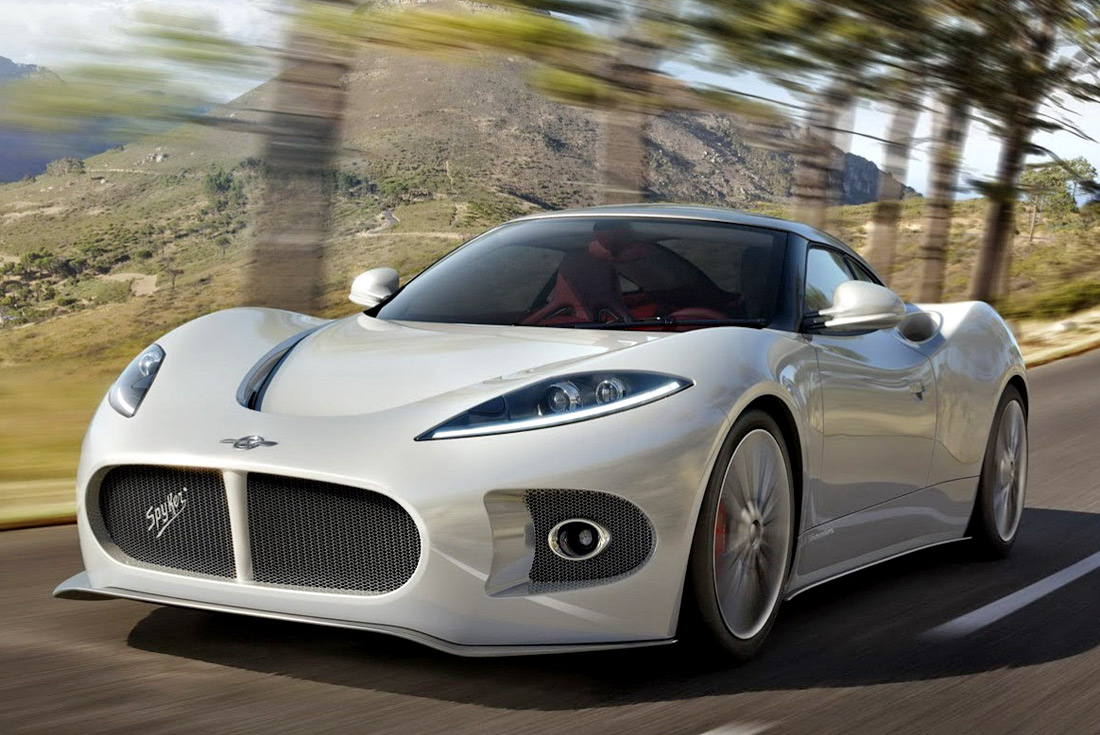
GREAT NEWS - Spyker has been removed from bankruptcy, and will launch new B6 Venator soon.

Dutch supercar maker Spyker won its appeal against being placed in bankruptcy by a court late last year. Spyker CEO Victor Muller said he now intends to push ahead with development of the company's B6 Venator, an entry-level luxury sports car, and to merge with a U.S. based manufacturer of high performance electric aircraft.
Spyker has been struggling to survive financial setbacks since its ill-fated acquisition of Saab from General Motors in 2010.
Spyker was placed in bankruptcy on Dec. 18 by a Dutch court after bridging finance promised while it was under creditor protection failed to arrive. Spyker got the money 11 days later and appealed the court’s bankruptcy declaration.

A Dutch appeals court on Thursday declared the bankruptcy "null and void with retrospective effect." This puts the company back under the protection of the "moratorium of payment" – equivalent to U.S. Chapter 11 protection from its creditors.
Muller said that the company has now reached agreement with the majority of its creditors. As a result "we should see Spyker exit 'moratorium of payment' in a matter of weeks," he said in a statement.
Spyker hopes the B6 Venator, a mid-engined 375-hp V6 sports car unveiled at the 2013 Geneva auto show, will attract more customers. The model is intended to compete with such cars as the Porsche 911 and Lotus Evora.


When it was first revealed there were suggestions it would be priced around 160,000 euros. That is about 40,000 euro less than the 198,500-euro 2014 European list price of Spyker's 4.2-liter C8 Aileron sports car.
Muller is keen to pursue a merger with a U.S. based specialist aircraft manufacturer once Spyker comes out from the "moratorium of payment." The logic for this, according to Muller, is that "the exciting new sustainable and disruptive technologies" currently being developed by the as yet unnamed company will be of value in future "full electric" Spyker cars.

REPORT HERE

Kamis, 29 Januari 2015

Renault expects to produce between 3,000 - 5,000 Alpine sports cars per year.

A Renault executive today revealed the output expectations for the automaker's Alpine-badged sports car.
"In terms of scale, on average [annual production] volume will be about 3,000 cars, with a peak of 5,000 initially due to the novelty factor," Alpine head Bernard Ollivier told Reuters in an interview.

Renault plans to launch production of the sporty brand at the end of 2016 and start selling Alpine models in Europe and key emerging market economies the following year, Ollivier, interviewed on the sidelines of an auto festival in Paris, said.
No further details were revealed, but a spokesman told Automotive News Europe that the project is "on schedule," adding that the automaker is "on track to deliver the model to customers in about two years."

Alpines have not been made since 1995. The new sports car will have a rear-mounted engine and be built at Renault's plant in Dieppe, northern France.
News of the revival coincides with Renault's celebration of the Alpine brand's 60th birthday. To mark the occasion, Alpine has created the Alpine Vision Gran Turismo, a virtual racing car that will feature in the Gran Turismo 6 video game.

VW to build next gen Phaeton, even though it losses money & VW is slashings overall costs.

With Volkswagen having embarked on a big cost-cutting drive, industry experts are baffled why the "people's car" maker plans to spend millions of euros upgrading a money-losing luxury sedan.
The 76,000 euro ($86,000) Phaeton, a pet project of Chairman Ferdinand Piech, has never met VW's original sales target of 20,000 cars annually. Analysts say the upper-premium car, which cost more than 1 billion euros to develop and came out in 2002, should be axed.
But sources at VW told Reuters that the company is now planning a more advanced version of the Phaeton -- even though the first-generation car was ranked by Bernstein analyst Max Warburton as one of the three "most loss-making European cars of modern times."
The plans appear all the more perplexing to analysts as VW has pledged to make annual cost savings of 5 billion euros at its passenger-car brand by 2017, as the world's second-biggest carmaker by sales seeks to narrow the gap with global leader Toyota.

'Painful action'
Announcing the "efficiency program" last July, CEO Martin Winterkorn promised "painful action" to revive the core brand where profit margins have been languishing due to a proliferation of models and parts.
"It's no longer all about bigger, higher, further," the CEO told managers at a Dresden strategy conference in December. "Now it's about being leaner, faster, more efficient."
His comments echoed VW's plans to reduce the number of costly parts and drop some non-profitable variants from the German group's 310-model lineup as Europe's largest automaker shoulders costs of future growth and investments in lower-emissions technology.
Revamping the Phaeton will seems to contradict the CEO's cost-cutting drive, said Evercore ISI analyst Arndt Ellinghorst, adding that switching production of the model to VW's MLB modular platform could cost as much as 650 million euros.
"Economically speaking, it's the most irrational project," London-based Ellinghorst said. "Piech and Winterkorn simply cannot let go of their fondness for luxury products."
A new glass-walled factory, R&D outlays and low sales volume led VW to lose 28,000 euros on each Phaeton sold between 2002 and 2012, Warburton wrote in a September 2013 note.
Unfazed by the losses, VW aims to pit the next-generation model against the Mercedes' 80,920 euro S-class flagship, sources said, adding the car may hit dealerships in 2017-2018. A plug-in hybrid version is also planned.
VW confirmed it was planning a successor to the Phaeton but declined to comment on the details or costs. It also declined to comment on analysts' loss, cost and sales estimates for the existing version, but said the sedan helped to show off its technical prowess.
The company does not disclose sales data for individual brands, only production numbers, which show it produced 5,812 Phaetons in 2013 -- the most recent annual figures published.
High-end battle
Stefan Bratzel, head of the Center of Automotive Management think tank near Cologne, said another high-end luxury sedan may overstretch the VW brand, traditionally a mass-market division which in November released a more upmarket Passat.
A new Phaeton could also affect sales of VW's other premium offerings, especially the Audi's flagship A8 sedan, which may share MLB underpinnings with the VW-badged model, he said.
"It doesn't make much sense strategically," Bratzel said. "The business case is equally questionable."
A new Phaeton would struggle against its premium rivals, analysts say. Sales of the model will average no more than 11,900 cars a year in 2017-2020, up from 6,300 this year, according to estimates from research firm IHS Automotive.
That compares with annual averages of 85,000 units for the Mercedes S class, 64,000 for BMW's 7 series and 41,000 for Audi's A8 in the four-year period, according to IHS data.
Buyers will never warm up to the notion of an upper-premium sedan made by the "people's car" brand unless they get a huge discount, a former VW Group executive told Reuters.
"This is the inherent problem, which puts the car's price positioning and profitability at risk," he said.
The Phaeton is the brainchild of Piech, the mastermind of VW's global expansion and its former CEO, who is well known for outmaneuvering both rivals and allies.
Sacred project
A former Audi North American chief, Axel Mees, was forced to leave the company in 2004 after criticizing the Phaeton project and Piech in public, a source at Audi said.
Meanwhile, Michael Horn, VW's new U.S. boss is chasing a lofty sales target of 800,000 VW brand cars by 2018, more than double last year's tally.
Horn will be tasked with relaunching the next Phaeton in the U.S. after VW pulled the model from the world's biggest premium-car market in 2006 because of poor sales.
Horn struggled with the answer when asked by Reuters at the Detroit auto show what potential he sees for the model in the country.
"That's a dangerous question," he said. "It's an image bearer with no relevance for volume."
USA - Porsche to increase availability of the Macan to teh US to meet huge demand.

Porsche is working to increase supplies of the new Macan midsize crossover to U.S. dealers in 2015.
“We’re certainly pushing because it’s been a big success,” Joe Lawrence, chief operating officer of Porsche Cars North America, said after the Porsche officials met with U.S. dealers here on Sunday. “We’re having some issues with customers having to wait longer than we would like, and we don’t want to lose those customers.”
Wait times for Macan buyers have been six months or more since it went on sale last May. U.S. dealers are looking forward to getting more Macans this year and getting them into the hands of buyers more quickly. A diesel-powered Macan is also expected near the end of the year.

“We’re going to expand that Macan number,” said Mike Sullivan, owner of Pacific Porsche in Torrance, California, and a member of the Porsche Dealer Board of Regents in the U.S. “It’s pretty exciting. We were so limited.”
Lawrence declined to estimate the number of Macans that will be allocated to the U.S. market in 2015. Porsche sold 7,241 Macans during the seven months it was on sale last year.
Though Porsche’s U.S. executives are pushing for higher allocation of the Macan, it’s not confirmed, Lawrence said.

“We would be happy to get more,” he said. “But the factory [in Leipzig, Germany] is constrained, and the worldwide demand is so strong on that car.”
Still, a full year of Macan sales is expected to put Porsche over its goal of selling 50,000 vehicles in the U.S., three years earlier than the 2018 deadline originally set by the automaker. Porsche sold 47,007 vehicles in the U.S. in 2014, an 11 percent annual increase. The overall U.S. market rose 6 percent.
“Our target clearly is to exceed 50,000 this year,” Lawrence said. “We believe we’ll have the production and the right mix to be able to do that. A full year of Macan obviously helps that situation and makes it possible.”
Amy Wilson

Selasa, 27 Januari 2015

Honda confirms the ACCORD is being dumped in Europe from next year.

Honda will end sales of the Accord midsize sedan in Europe after the car failed to make headway against German rivals. “We are running out the Accord and we will not return to the segment,” Leon Brannan, Honda’s UK car division boss, told Automotive News Europe at a press event here.
Honda has struggled to sell the Accord in a segment where even the most popular mass-market models such as the Volkswagen Passat and Ford Mondeo are losing sales to premium rivals such as the BMW 3 series and Mercedes C class.

Brannan said the midsize segment is dominated by corporate sales to German premium brands. “The cost to compete is eye-watering,” he said.
Honda launched the Accord in Europe in 1977 and began building the car at its factory in Swindon, England, in 1992. The Accord attracted buyers with its reliability and affordable technology.
However, after a production shift from the UK to Japan in 2000, Honda was unable to match discounts offered by European automakers when the yen strengthened against local currencies.

The Accord’s European sales fell 19 percent to 3,453 last year, according to data from JATO Dynamics.
Honda’s total vehicle sales in the EU and EFTA markets fell 5 percent to 133,268 last year, giving it a 1 percent market share, according to data from industry body ACEA.
Honda expects its European sales to rebound this year, helped by new models including the HR-V subcompact crossover, which will go on sale in Europe in the spring. The company has also refreshed its top-selling car in Europe, the CR-V compact SUV.
Nick Gibbs

Sabtu, 24 Januari 2015

Toyota edges out VW to take the #1 spot in 2014, long time holder GM moves to third.

Toyota Motor Corp. defended its crown as the world’s biggest automaker in 2014, selling 10.23 million vehicles to keep a slim lead over German rival Volkswagen Group.
But the Japanese giant also forecast sales to slump 1 percent to 10.15 million in the current calendar year, on the back of slowing demand in Japan and emerging markets.
It would be the first time sales have fallen since 2011, when Japanese automakers were broadsided by the killer Japanese earthquake and tsunami that derailed production and sales.
Another retreat could open the door for VW to steal the lead in 2015.
Toyota sales, including deliveries from its Daihatsu minicar subsidiary and Hino truckmaking affiliate, climbed 3 percent to 10.23 million vehicles in calendar year 2014, the company said today in a release. Volume exceeded 10 million units for the first time at Toyota.

The total edged the 10.14 million vehicles sold by VW, which also crossed the 10 million-unit mark for the first time in 2014. General Motors Co., the biggest U.S. automaker, finished third in last year’s sales race, with global volume rising 2 percent to 9.92 million vehicles.
Both Toyota and VW had forecast sales to exceed 10 million in 2014.
VW CEO Martin Winterkorn has been pursuing growth as part of a plan for the German automaker to become the world’s largest automaker by 2018. He had originally envisioned sales of 10 million units by then, but as shown by his company’s 2014 results, VW is far ahead of schedule.
Toyota has resumed its sales march after being thrown off pace in 2011 by the Japan earthquake-tsunami disaster that hit production hard for much of the year.
That year, GM edged Toyota to reclaim the top spot. GM had held the title for almost 80 years before Toyota moved ahead in 2008. Toyota led the world in 2008, 2009 and 2010. In 2012, the Japanese carmaker reclaimed the title from GM with sales of 9.75 million.
Last year, Toyota edged VW and GM with sales of 9.98 million.
Looking ahead, Toyota expects sales outside Japan to increase 2 percent to 8.06 million vehicles. But that will be offset by a 9 percent tumble in domestic sales to 2.1 million units.

The parent company expects home market volume to fall 7 percent to 1.45 million for its Toyota and Lexus passenger car brands. Daihatsu and Hino sales are also expected to fall.
The Japanese government raised the national consumption tax in 2014, crimping demand for big-ticket items such as cars. But tumbling oil prices are also sapping demand for fuel-efficient gasoline-electric vehicles, which account for a large portion of the Prius-maker’s sales.
Toyota forecast domestic production to fall 6 percent to 3.97 million vehicles in 2015. But globally, it expects output to advance 1 percent to 10.21 million, partly on robust U.S. demand.
Hans Greimel

Jumat, 23 Januari 2015

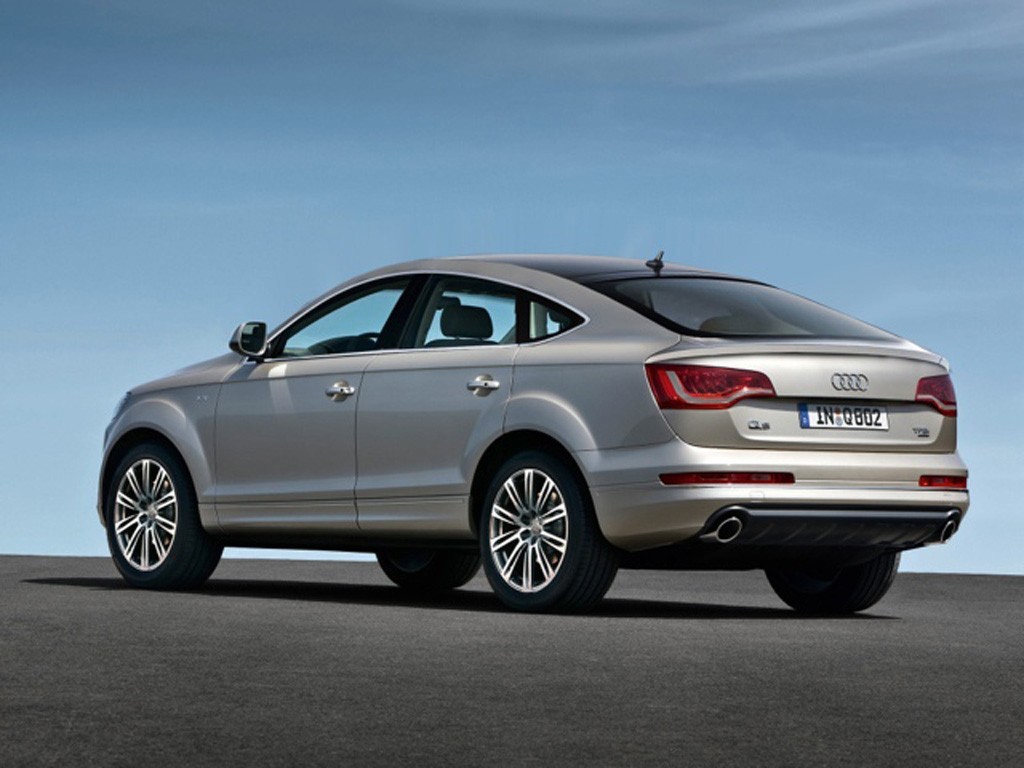
Audi gives the go ahead to a range topping Q8 SUV/Crossover.

Audi plans to roll out a range-topping SUV called the Q8 that will go on sale before the end of the decade, Audi CEO Rupert Stadler told Bloomberg.
The coments follow those Stadler made in May, when the executive said Audi was mulling whether to build a Q8 model above the Q7, Audi’s current flagship SUV.
His comments followed BMW’s announcement that it planned to build a new X7 in response to customer demand for an SUV/crossover with three rows of seats.
THE BELOW ARE POSSIBLE LOOKS FOR THE CAR AS NO MULE HAS, AS YET BEEN SPOTTED OUT IN THE WILD - SO PLEASE TAKE THESE AS POSSIBILITIES AND NOT REALITY, THEY ARE ALL EASILY FINDABLE ON GOOGLE SEARCH

Audi’s new SUV would be aimed at markets such as the U.S., China and the Middle East, where large coupe-styled SUVs are in demand.
Audi is "working heavily on this project," said Stadler, who last week at the Detroit auto show unveiled a revamped version of the Q7.
A bigger model "would strengthen the brand. I'm convinced we need the car by 2020," Stadler said.
Audi investment
The new model would be part of Audi's plans to spend 24 billion euros ($27.8 billion) on technology and production in the next five years. Most of the money will go to increase its lineup to 60 cars from 50. That includes the subcompact Q1 crossover due in 2016. When the Q1 arrives Audi's SUV will grow to four models. The others are the compact Q3 compact, midsize Q5 and large Q7.
Audi wants to unseat the BMW brand as the world's largest maker of premium cars by 2020. In 2014 Audi was second to BMW and Mercedes-Benz ranked third.
An expanded SUV offering could help Audi gain ground in the U.S., where it only sells about half as many cars as its two German competitors.

Even so, Audi will face even more competition by the time the new upscale SUV hits showrooms. In addition to BMW adding the X7, Mercedes plans to add its own flagship SUV. Jaguar will also start selling its first crossover, the midsize F-Pace, in 2016.
Despite more models vying for buyers, Audi is upbeat on its prospects in the U.S., where SUVs have continued to gain in popularity and there's space for luxury brands to grow. In the coming years, high-end autos could account for as much as 13 percent of the U.S. market, up from about 10 percent now, Stadler said.
And after outselling its rivals in other major markets, the brand believes it can repeat that feat in the U.S. "We did it in China, we did in Europe. Why shouldn't it happen in the U.S. at some point?" Stadler said.